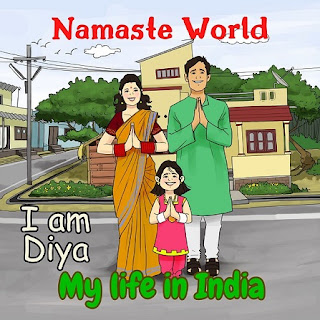
Please check out my book below: 👇: Namaste World. I am Diya. My life in India:

India for kids

Gift Ideas for Shakespeare Lovers


Here are some gift ideas for fans of William Shakespeare:

Books: A collection of Shakespeare's plays or sonnets would make a great gift for someone who loves literature. There are many beautifully bound editions available, some with additional commentary and footnotes to provide extra context and understanding.

Theatre tickets: If your loved one is a fan of the theatre, consider getting them tickets to see a Shakespeare play. Many theatres around the world regularly produce Shakespeare's works, and attending a live performance can be a truly magical experience.

Clothing and accessories: There are many items available that feature quotes or designs inspired by Shakespeare's works. Consider a t-shirt, mug, or tote bag with a Shakespeare-themed design. T-shirts can be a great gift for fans of William Shakespeare. There are many t-shirts available that feature quotes or designs inspired by Shakespeare's works, making them a fun and stylish way to show off your love for the Bard. Some t-shirts feature iconic quotes from Shakespeare's plays, while others have designs inspired by the characters or settings of his works. Whether your loved one is a theatre buff or just a fan of literature, a Shakespeare-themed t-shirt is sure to be a hit. 

I would challenge you to a battle of wits, but I see you are unarmed. 

Art prints: There are many beautiful art prints available that feature scenes or quotes from Shakespeare's plays. These make for a unique and thoughtful gift for a Shakespeare fan.

Films and TV adaptations: If your loved one enjoys watching movies or TV shows, consider getting them a DVD or streaming subscription for a film or TV adaptation of one of Shakespeare's plays. This can be a great way to introduce them to the works of the Bard in a new and exciting way.

Jewellery: Consider a necklace, bracelet, or pair of earrings inspired by Shakespeare's works. These make for a unique and thoughtful gift that your loved one can wear and enjoy every day.

Posters: A poster featuring a scene or quote from one of Shakespeare's plays can be a great addition to any room. There are many beautiful designs available, so you're sure to find something that your loved one will enjoy.

Notebooks and journals: For someone who loves to write or take notes, consider getting them a Shakespeare-themed notebook or journal. These can be a great way to show off their love for literature and provide a useful and practical gift.

Figurines: There are many figurines available that depict characters from Shakespeare's plays. These make for a unique and decorative gift that any Shakespeare fan will appreciate.

Mugs: A mug with a Shakespeare-themed design or quote can be a great gift for someone who loves literature and enjoys a hot cup of tea or coffee.

Bookmarks: For someone who loves to read, consider getting them a bookmark featuring a quote or design inspired by Shakespeare's works. This can be a useful and thoughtful gift.

Home decor: There are many home decor items available that are inspired by Shakespeare's works. Consider a throw pillow, tapestry, or wall art featuring a scene or quote from one of his plays.

Games: There are many games available that are based on Shakespeare's plays or include references to his works. Consider a board game, card game, or puzzle that your loved one can enjoy.

Accessories: There are many accessories available that feature Shakespeare-themed designs, including scarves, hats, and bags. These make for a stylish and practical gift.

Toys: There are many toys available that are based on characters from Shakespeare's plays. These make for a fun and unique gift for children or collectors.

Tagalog numbers in words


Tagalog numbers are used to count or measure things in the Tagalog language which is spoken in the Philippines. The numbers 1 to 10 are: isa, dalawa, tatlo, apat, lima, anim, pito, walo, siyam, sampu. The numbers 11 to 19 are formed by combining the words for "10" (sampu) and "1" to "9", respectively. For instance 11 is "labing-isa" (sampu + isa), 12 is "labing-dalawa" (sampu + dalawa) and so on.

The numbers 20 to 99 are formed by combining the words for the tens and the ones. For example, 21 is "dalawampu't isa" (dalawampu + at + isa), 22 is "dalawampu't dalawa" (dalawampu + at + dalawa), so on and so forth. 100 is "isang daan", and multiples of 100 are formed by combining "daan" with the appropriate number, such as "dalawang daan" for 200 and "tatlong daan" for 300. More on Tagalog numbers 1 to 100 here

To form numbers larger than 100, the words for "libo" (thousand) and "libong" (thousands) are used. For example, 1000 is "isang libo", 2000 is "dalawang libo" and so forth.

Tagalog Words for Babies and Toddlers. Tagalog for Beginners. Kids Picture Book: Easy to Learn Tagalog Words for Bilingual Children

Here are the Tagalog numbers in words

1 - isa

2 - dalawa

3 - tatlo

4 - apat

5 - lima

6 - anim

7 - pito

8 - walo

9 - siyam

10 - sampu


11 - labing-isa

12 - labing-dalawa

13 - labing-tatlo

14 - labing-apat

15 - labing-lima

16 - labing-anim

17 - labing-pito

18 - labing-walo

19 - labing-siyam

20 - dalawampu


30 - tatlumpu

40 - apatnapu

50 - limampu

60 - animnapu

70 - pitumpu

80 - walumpu

90 - siyamnapu

100 - isang daan


200 - dalawang daan

300 - tatlong daan

400 - apat na daan

500 - limang daan

600 - anim na daan

700 - pitong daan

800 - walong daan

900 - siyam na daan

1000 - isang libo


2000 - dalawang libo

3000 - tatlong libo

4000 - apat na libo

5000 - limang libo

6000 - anim na libo

7000 - pitong libo

8000 - walong libo

9000 - siyam na libo

10000 - sampung libo

Tagalog Words for Babies and Toddlers. Tagalog for Beginners. Kids Picture

Letters to my mom in heaven

It was a beautiful summer night when my mother passed away. She had been sick for a long time, and although I had tried to prepare myself for the worst, I still wasn't ready for the overwhelming sense of loss that washed over me when I received the news.

At first, I tried to carry on with my life as best I could. I went to work, spent time with friends, and tried to keep busy. But no matter how hard I tried, I couldn't shake the feeling that something was missing. I felt hollow and empty, like a part of me had been torn away.

As the days turned into weeks, I found myself becoming more and more isolated. I didn't have the energy or desire to do the things I used to enjoy, and even my closest friends couldn't seem to reach me. I felt like no one understood the depth of my grief or the way it consumed my every thought and action.

It was in the depths of my despair that I started writing to my mother in heaven. At first, it was just a way to pass the time, but as I wrote more and more, I started to feel a sense of comfort and peace. It was as if my mother was still with me, listening and offering guidance and support.

Over time, my letters became a lifeline, a way to process my grief and find a sense of purpose in the midst of my pain. And as I wrote, I began to heal. I started to reconnect with the people and activities that brought me joy, and slowly but surely, I started to feel like myself again.

For anyone who has lost a mother and is struggling to cope, my story offers hope and inspiration. And for those who want to find solace in the written word, "Letters to My Mom in Heaven" offers a way to connect with the loved ones we have lost and find comfort in the memories we hold dear.

Letters to My Mom in Heaven.: Blank Journal to Write Letters to a Mom in Heaven.

Letters to my mom in heaven

Dear Mom,

I miss you every day. There isn't a single moment that goes by where I don't think of you and wish that you were here with me. I miss your smile, your laughter, and the way you always knew just what to say to make me feel better.

I miss our talks and the way you always listened to me, no matter what. I miss the way you hugged me and made everything feel right in the world. I miss the way you loved me, even when I was at my worst.

I know you're not physically here with me anymore, but I feel you with me in my heart and in my memories. Your love and guidance have stayed with me and continue to shape the person I am today.

I love you, Mom. I miss you so much, and I wish you were here to share all of the little moments and big milestones with me. But I am grateful for the time we had together, and I will always cherish the memories we made.

Forever yours,

Shalu Sharma

Power of gratitude - My personal story


I had always been a bit of a pessimist. It was just how I was wired, and I never really thought much about it. I was the kind of person who saw the glass as half empty and focused on the things that were going wrong in my life. I had a good job, a loving family, and a roof over my head, but I was never satisfied. I always wanted more and I always found a way to be unhappy with what I had.

One day, I stumbled upon an article about the power of gratitude. It talked about how being grateful for the things you already have can lead to greater happiness and satisfaction in life. It sounded too good to be true, but I was desperate for a change, so I decided to give it a try.

I started by making a list of things I was grateful for each day. At first, it was difficult to come up with things. I had to really think about the good things in my life, and it was hard to see past the negative. But as I kept at it, it became easier and easier to find things to be grateful for. Some days, it was the simple things that I was grateful for, like having a comfortable bed to sleep in or a warm meal to eat. Other days, it was the bigger things, like having a supportive group of friends or a job that I enjoyed.

As I focused on gratitude, my perspective began to shift. I started to see the good in my life rather than the bad. I realized that I had a lot to be grateful for, and that made me feel happier and more content. Instead of constantly striving for more, I began to appreciate what I already had. I also found that I was less likely to take things for granted and was more willing to help others when they needed it.

I also noticed that my relationships improved. I was more patient and understanding with the people around me because I was focusing on the good things in my life. And as a result, they were more patient and understanding with me too. I found that I was able to let go of grudges more easily and was more open to hearing other people's perspectives. My relationships became deeper and more meaningful as a result.

I also found that gratitude helped me to be more present and to appreciate the moment I was in. Rather than constantly worrying about the future or dwelling on the past, I was able to focus on what was happening right in front of me. I became more aware of my surroundings and was able to fully engage in the present moment. This helped me to find joy in the small things and to make the most of each day.

Overall, incorporating gratitude into my life has been a game changer. It's helped me to see the good in my life and to be more content with what I have. It's also helped me to have better relationships and to be more present in each moment. If you're feeling stuck or unhappy, I highly recommend giving gratitude a try. It could make a huge difference in your life too. So, the power of gratitude is really great and it can change your life completely.

Moan and move on gratitude journal. Things I’m fed up with and my gratitude journal notebook: Gratitude & moan writing journal notebook. A moan and gratitude journal for women.

Hinduism facts for kids

Hinduism facts for kids


Hinduism is a major world religion that originated in India and is based on a collection of ancient texts called the Vedas. It is the oldest living religion in the world and has over one billion followers. 

Here are some facts about Hinduism for kids: 

Hinduism For Kids: Beliefs And Practices

Hindus believe in a supreme being called Brahman, who is the creator and sustainer of the universe. 

Hindus also believe in reincarnation, the idea that after a person dies, their soul is reborn into a new body. The goal of Hinduism is to eventually achieve moksha, or liberation from the cycle of reincarnation and union with Brahman. 

Hinduism has a caste system, which divides people into social classes based on their profession or birth. However, the caste system has been abolished by the government of India and is no longer practiced in the same way it was in the past. 

Hindus follow a number of different deities, including Shiva, Vishnu, and Devi. Each deity represents different aspects of the supreme being and can be worshipped in various forms. 

Hinduism also has a rich tradition of art and literature, including the Mahabharata and the Ramayana, which are epic poems that tell the stories of Hindu gods and heroes. 

Hinduism has a variety of practices and rituals, including puja (worship), yoga, and meditation. These practices are meant to help Hindus connect with the divine and achieve spiritual growth. 

Hinduism has a strong emphasis on dharma, which refers to living a moral and virtuous life. Hindus believe that living a good and ethical life helps to bring about personal and spiritual growth. 

Hinduism is a diverse religion and there are many different interpretations and practices within it. It is open to individuals of any background and allows for a wide range of beliefs and practices. 

Hinduism is not only a religion, but also a way of life for many people in India and around the world. It influences many aspects of daily life, including diet, family structure, and cultural traditions. 

Hinduism is a rich and complex religion with a long history and a diverse set of beliefs and practices. It has had a significant impact on the world and continues to be a major force in modern society. 

Hinduism has no single founder or central authority, and it has evolved and adapted over time. 

The Vedas, the oldest and most important Hindu scriptures, contain hymns, rituals, and philosophical teachings. 

Hindus follow a number of different paths or "yogas" to achieve spiritual growth, including the paths of devotion (bhakti yoga), knowledge (jnana yoga), and self-discipline (raja yoga). 

Hinduism has a strong tradition of guru-student relationships, in which a guru (teacher) passes on spiritual knowledge and guidance to a student. 

Hinduism places a strong emphasis on the importance of family and community, and many Hindu festivals and ceremonies are centered around these themes. 

Hinduism has a rich tradition of music, dance, and art, and many Hindu festivals and ceremonies feature these forms of expression. 

The cow is considered a sacred animal in Hinduism and is often depicted in Hindu art and mythology.

Hinduism has a complex system of symbolism, including the use of different colors, animals, and objects to represent different deities or concepts. 

Hinduism has a number of sacred texts in addition to the Vedas, including the Upanishads (philosophical treatises), the Bhagavad Gita (a scripture that discusses the nature of God and the path to enlightenment), and the Puranas (mythological stories). 

Hinduism has a long history of social justice and activism, and many Hindus are involved in various charitable and humanitarian efforts both within their communities and around the world.

Hinduism has a rich tradition of yoga, which involves physical, mental, and spiritual practices aimed at achieving union with the divine. 

Hinduism teaches the importance of ahimsa, or non-violence, and many Hindus follow a vegetarian diet as a way to practice this principle. 

Hinduism has a complex system of rituals and ceremonies, including puja (worship), yajna (sacrifice), and homa (fire ritual). These rituals may involve offerings of flowers, incense, and other items to the gods. 

Hinduism has a number of holy days and festivals, including Diwali (the festival of lights), Holi (the festival of colors), and Navaratri (a nine-night festival celebrating the goddess Devi). 

Hinduism has a number of holy places, including temples, shrines, and holy rivers. The Ganges River is particularly sacred to Hindus and is seen as a source of purification and blessings. 

Hinduism has a complex system of caste, which traditionally divided people into four main categories: Brahmins (priests and scholars), Kshatriyas (rulers and warriors), Vaishyas (merchants and farmers), and Sudras (workers). 

Hinduism has a number of holy symbols, including the Om symbol (a sacred syllable representing the divine), the Swastika (a symbol of good fortune and well-being), and the Trishula (a trident symbolizing the three aspects of the divine). 

Hinduism has a number of holy texts that are considered sacred to Hindus, including the Vedas, the Upanishads, the Bhagavad Gita, the Puranas, and the Agamas. 

Hinduism has a number of different schools of thought, including Advaita Vedanta (the idea that the individual self and the divine are one and the same), Dvaita Vedanta (the idea that the individual self and the divine are separate), and Samkhya (a dualistic philosophy that divides the world into matter and consciousness). 

Hinduism has a rich tradition of storytelling and mythology, including the stories of the gods and goddesses, heroes and heroines, and demons and monsters. 

Hinduism has a number of holy animals, including the cow, the elephant, and the snake. 

Hinduism has a number of holy plants, including the tulsi (sacred basil) and the neem tree. 

Hinduism has a number of holy foods, including prasad (sacred food offerings made to the gods), and many Hindus follow a lacto-vegetarian diet as a way to practice ahimsa (non-violence). 

Hinduism has a number of holy colors, including red, which is associated with the goddess Devi, and saffron, which is associated with spiritual purity. 

Hinduism has a number of holy numbers, including three (representing the trinity of Brahma, Vishnu, and Shiva) and nine (representing the nine planets and the nine forms of the goddess Devi). 

Hinduism has a number of holy sounds, including Om (a sacred syllable representing the divine), and many Hindus practice chanting as a way to connect with the divine.

Hinduism has a number of sacred places and pilgrimage sites, including the city of Varanasi (also known as Benares or Kashi), which is considered one of the holiest cities in Hinduism. 

Hinduism has a strong tradition of asceticism, in which people renounce worldly possessions and desires in order to focus on spiritual growth. 

The practice of yoga, which involves physical postures, breathing techniques, and meditation, originated in Hinduism and is now popular around the world. 

Hinduism has a number of different sects and philosophical schools, including the monistic (advaita) tradition, which teaches that the individual self is ultimately identical to the divine, and the dualistic (dvaita) tradition, which teaches that the individual self is separate from the divine. 

Hinduism has a number of sacred rituals and ceremonies, including the puja, in which offerings are made to a deity, and the yajna, a ritual in which offerings are made to the gods through fire. 

Hinduism has a number of sacred festivals and celebrations, including Diwali (the festival of lights), which celebrates the victory of good over evil, and Navaratri (the nine nights festival), which honors the goddess Durga. 

Hinduism has a number of sacred symbols, including the Om symbol (a sacred syllable representing the divine), the lotus flower (a symbol of purity and enlightenment), and the Swastika (a symbol of good fortune and auspiciousness). 

Hinduism has a number of sacred objects, including the mala (a string of beads used for prayer and meditation), the tilaka (a mark worn on the forehead as a sign of devotion), and the kalasha (a pot filled with water and topped with a coconut, which is used in puja and other rituals). 

Hinduism has a number of sacred animals, including the elephant (which is associated with the deity Ganesha), the snake (which is associated with the deity Shiva), and the cow (which is considered a symbol of wealth, strength, and nourishment). 

Hinduism has a number of sacred plants, including the tulsi (a sacred basil plant that is believed to have medicinal and spiritual properties), the banyan tree (which is considered a symbol of eternal life), and the neem tree (which is used in Ayurvedic medicine and is believed to have purifying and protective properties). 

Hinduism has a number of sacred mountains, including the Himalayas, which are considered the abode of the gods and are home to many important Hindu pilgrimage sites. 

Hinduism has a number of sacred rivers, including the Ganges, which is considered a holy river and is believed to have purifying properties. 

Hinduism has a strong tradition of social justice and concern for the welfare of all beings, and many Hindus are involved in charitable and humanitarian efforts both within their communities and around the world. 

Hinduism has a number of sacred texts in addition to the Vedas, including the Manu Smriti (a legal text that discusses the duties and responsibilities of different social classes), the Arthashastra (a political treatise), and the Mahabharata (an epic poem that tells the story of the Kuru dynasty). 

Hinduism Facts for Kids  and Adults

What are the major Hindu gods

Hinduism has a pantheon of deities, but there are a few major gods that are particularly important and widely worshipped. Here are four major Hindu gods for kids: 

Brahma: Brahma is the creator god and is responsible for the creation of the universe. He is often depicted with four faces, representing the four Vedas (sacred texts). 

Vishnu: Vishnu is the preserver god and is responsible for maintaining balance in the universe. He is often depicted with four arms, holding a conch shell, a discus, a club, and a lotus flower. 

Shiva: Shiva is the destroyer god and is responsible for the destruction of the universe at the end of each cosmic cycle. He is often depicted with a third eye and a crescent moon on his head. 

Devi: Devi (also known as Shakti or Durga) is the mother goddess and is the consort of Shiva. She is the embodiment of the creative and sustaining power of the universe and is often depicted as a warrior goddess, riding a lion and brandishing weapons. 

These four gods are often considered the major deities in Hinduism, but there are many other gods and goddesses that are also worshipped and revered.

Namaste World. I am Diya. My life in India: (Multiculturalism for Children: Introduction to Global Diversity, Cultures and Customs)


hinduism facts for kids


Poem on Bihar


Bihar, the land of Ashoka the Great
Where Gupta dynasty once reigned
Buddha and Mahavira both preached here
In Magadha, their teachings were retained

Sita, the queen of Ramayana fame
Was born in Bihar, it's her native land
Mahatma Gandhi, a man of great fame
Walked these streets, with a message so grand

But Bihar, oh Bihar, how you've fallen
Your failures, they cannot be ignored
But fear not, for you will rise again
Your future, it will be restored

 For Bihar, you are full of potential
Your people, they are strong and true
You've faced hardship, but you will prevail
Your spirit, it will see you through

So Bihar, hold your head up high
Your glory days, they will return
For you are the land of kings and sages
Your future, it will brightly burn

A poem on Bihar in Hindi

बिहार, जो सदैव धन्य रहा
अशोक ने तिरंगा फैलाया
गुप्त वंश ने स्थापित रहा
बुद्ध और महावीरा ने बचाया 

मगधा का इतिहास है महान
सीता के नाम से जाना जाता है
महात्मा गांधी ने भी यहाँ आया
बिहार का हुआ है स्मृतियों का स्थान 

हालांकि, बिहार में अभी भी है असमर्थता
विकास में है अनमोल हिंदूस्तान
लेकिन हम समझते हैं इसका सफर
बिहार फिर से उठेगा, इसका है हमारा विश्वास 

आओ हम सब एक होकर संभलें
बिहार को फिर से सुनहरा बनाएं
अशोक, बुद्ध, महात्मा गांधी से सलाम
हमारा है यह धरती, बिहार हमारा है आसमान

Buddha quotes on changing yourself


The wise words of the Buddha have inspired many over the years, and his words on the topic of changing yourself are particularly relevant for those of us seeking to make meaningful changes in our lives. From his thoughts on self-improvement to his views on perseverance, the following quotes by Buddha can be used as inspiration and guidance in our quest for personal growth.

The first quote by Buddha on changing yourself is “You, yourself, as much as anybody in the entire universe, deserve your love and affection”. This quote emphasizes the importance of self-love and self-care. Taking the time to show yourself compassion, kindness and appreciation can have a profound impact on how you view yourself and the changes you are making. Rather than expecting too much too soon, taking the time to appreciate your efforts and accomplishments, no matter how small, can be a powerful motivator.

The second quote by Buddha on changing yourself is “It is better to conquer yourself than to win a thousand battles”. This quote emphasizes the need to overcome our own personal obstacles, rather than relying on external successes to define our self-worth. When we are able to face our own inner battles and conquer our insecurities and fears, we are able to take meaningful action towards creating the life we want.

The third quote by Buddha on changing yourself is “Do not dwell in the past, do not dream of the future, concentrate the mind on the present moment”. This quote serves as a reminder to stay focused on the present and take one step at a time in order to achieve our goals. Rather than getting stuck in regret or anxious anticipation of the future, we can take a moment to recognize the present moment and use it as an opportunity to take action towards our goals.

The fourth quote by Buddha on changing yourself is “The mind is everything. What you think you become”. This quote speaks to the power of the mind and how it can shape our lives. By changing our thoughts and beliefs, we are able to create new possibilities for ourselves and open the door to positive change.

The fifth quote by Buddha on changing yourself is “You will not be punished for your anger; you will be punished by your anger”. This quote serves as a reminder to manage our emotions in order to avoid creating a cycle of anger and suffering. When we are able to take a step back and manage our emotional responses, we can create positive change in our lives and relationships.

The words of the Buddha can be an invaluable source of guidance and inspiration when it comes to changing ourselves. From self-love and self-care to conquering our own personal obstacles, these quotes can serve as reminders to focus on the present and take action towards our goals. By harnessing the power of our thoughts and managing our emotions, we can create a more meaningful and fulfilling life for ourselves.

In addition to the quotes mentioned above, the Buddha is credited with many other wise and profound sayings. Here are a few more quotes on the subject of changing oneself:

"You yourself, as much as anybody in the entire universe, deserve your love and affection."

"The mind is everything. What you think, you become."

"An insincere and evil friend is more to be feared than a wild beast; a wild beast may wound your body, but an evil friend will wound your mind."

"All that we are is the result of what we have thought. The mind is everything. What we think we become."

"Holding on to anger is like grasping a hot coal with the intent of throwing it at someone else; you are the one who gets burned."

"The tongue like a sharp knife... Kills without drawing blood."

"Peace comes from within. Do not seek it without."

These quotes suggest that the key to changing oneself is to focus on one's thoughts and inner state of being, rather than external circumstances. By practicing mindfulness and self-compassion, we can let go of negative thoughts and behaviours and cultivate a peaceful and loving state of mind.

Buddhism Made Easy: Buddhism for Beginners and Busy People

How has travel changed since covid?


Since the outbreak of COVID-19, the world of travel has undergone some drastic changes. From the emergence of new health and safety protocols to the introduction of digital technologies, the way we travel has drastically evolved in a short period of time. Lets take a look at how travel has changed since COVID-19 and how these changes have both improved and impeded the traveller’s experience.

In the age of COVID-19, travellers have been presented with a range of new health and safety protocols designed to ensure their safety during their trip. Airlines have implemented the mandatory wearing of face masks while flying, while hotels and other hospitality businesses are requiring guests to complete health check forms before they are allowed to stay. Many companies have also implemented new cleaning and sanitization protocols, such as deep cleaning guest rooms and other public areas, providing personal protective equipment to their staff and implementing temperature checks at the entrance of premises.

These protocols have not only impacted travellers directly but have also led to a number of changes in the booking and planning processes. Airlines and hospitality businesses now offer customers the option to cancel their bookings free of charge or to rebook for a later date with no additional charges. In addition, many companies now offer contactless check-in and payment options, allowing customers to avoid queues and remain socially distanced during their travels.

The use of digital technologies has also become increasingly commonplace in the travel industry since COVID-19. Digital solutions such as virtual tours, virtual reality (VR), augmented reality (AR), and artificial intelligence (AI) have been implemented to enhance the customer’s experience and provide them with a more personalized and interactive experience. AI chat-bots and virtual assistants are being used to help travellers find their way around their destination, while virtual reality is being used to provide customers with a 360-degree view of their destination before they even arrive.

However, the emergence of new health and safety protocols and the use of digital technologies have not been without their drawbacks. Some customers have expressed dissatisfaction with the mandatory wearing of face masks while flying, filling up extra forms, citing that it is uncomfortable, time taking and unpleasant. In addition many of the new digital technologies are expensive to implement and require a significant investment in resources, making them inaccessible to smaller businesses. Furthermore, the use of digital technologies has also created a number of privacy and security issues as personal data is being collected and shared with third parties.

Despite the changes brought about by COVID-19, travel has been able to adapt and evolve to meet the needs of its customers. The implementation of new health and safety protocols has enabled customers to travel with peace of mind knowing that their safety is being taken seriously. The use of digital technologies has opened up a range of new opportunities for travellers, allowing them to explore their destination like never before. As we move into the future, it is likely that the travel industry will continue to evolve to meet the changing needs of its customers.

10 phrases to know before going to India


Here are 10 phrases that could be useful for a tourist to know before visiting India:

If you are planning to visit India, it is always helpful to know some basic phrases in the local language particularly in Hindi.

Namaste: This is a traditional greeting in India that means "Hello" or "I bow to you." You can use this when you meet someone for the first time or when you want to politely get someone's attention.

Dhanyavaad: This is a way of saying "Thank you" in Hindi, which is one of the most widely spoken languages in India.

Kya aap Angrezi bolte hain?: This is a question that means "Do you speak English?" in Hindi. Knowing this phrase can be helpful if you need to communicate with someone who doesn't speak your language.

Mujhe bhook lagi hai: This is a phrase that means "I am hungry" in Hindi. You can use this if you need to let someone know that you're in need of food.

Kitne ka hai?: This is a question that means "How much is it?" in Hindi. It can be useful when you're shopping or trying to negotiate a price for something.

Kya aap Hindi bolte hain? - This means "Do you speak Hindi?" Hindi is one of the most widely spoken languages in India, and it can be helpful to know a few phrases in the language if you plan to travel there.

App kaha jaa rahe hain? - This means "Where are you going?" It can be useful to ask for directions or to ask locals for recommendations on places to visit.

Mujhe maaf karna - This means "excuse me" or "please forgive me." It's a polite way to get someone's attention or to apologize for any mistakes you may make.

Kitne ka hai? - This phrase is used to ask how much something costs. It is a useful phrase to know when shopping or bargaining for goods in India.

Mujhe chai chahiye - This phrase is used to ask for tea, which is a popular beverage in India. It is a simple way to order a cup of tea in a restaurant or cafe.

Aap kaise hain? - This means "how are you" in Hindi. It's a common question that people will ask you when they meet you, and it's a good idea to know how to respond

Essential Hindi Words And Phrases For Travelers To India

What are the 10 words that someone should know before traveling to india


Hindi is the most widely spoken language in India, with over 41% of the population speaking it as their first language. Therefore, learning Hindi before traveling to India could be very useful. However, India is a diverse country with many different languages, so it may also be worth learning the local language of the area you will be visiting. Some other commonly spoken languages in India include Bengali, Tamil, and Telugu.

All About India: Introduction to India for Kids

Here are 10 words that you should know before traveling to India

Namaste (hello)

Dosa (a type of savory pancake)

Rickshaw (a type of three-wheeled vehicle)

Masala (a mix of spices used in Indian cooking)

Chai (tea)

Bollywood (the Indian film industry)

Yoga (a physical and spiritual discipline)

Curry (a dish with a sauce made from a mixture of spices)

Monsoon (the rainy season)

Diwali (a major Hindu festival)


Namaste World. I am Diya

Namaste world I am Diya Children’sMulticulturalism book 


Letter to mom in heaven from daughter


Letters to My Mom in Heaven.: Blank Journal to Write Letters to a Mom in Heaven

Is it possible to write to one's deceased mother?

The question of whether it is possible to write to one's deceased mother is a complex one, and it is one that stirs emotion and thought. To answer it requires exploring the ideas of death, grief, and the power of words. Grief is a process that is individualized to the griever, so there can be no blanket answer to the question; however, it is possible to consider the evidence in order to make an educated guess.

To begin with, it is important to consider the concept of death. Death is a physical fact, in that the deceased body no longer exists. This fact is not altered by emotional attachment or feeling; death is death. Therefore, it is fair to say that it is not possible to communicate directly with the deceased. However, this does not necessarily mean that there is no connection between the living and the dead.

Another important element of this question is grief. Grief is an intense emotion and process that is experienced differently by every individual. There are, however, some common elements to grief. Grievers often find comfort in memorializing the deceased, by visiting grave sites, keeping mementos, or writing about their loved one. Thus, for some individuals, writing to the deceased may provide an avenue of comfort and connection. Writing can also be therapeutic; it can give the grievers an opportunity to express their feelings and put their thoughts into words.

It is important to consider the power of words. Words can be powerful and meaningful, and they can help the grievers in their journey of healing. Writing to a deceased mother can bring with it an opportunity to say what was never said in life, to express one’s feelings and thoughts, and to provide closure. It can also be a way of honouring the life of the deceased and remembering the good times that were shared.

Let’s put it this way; it is not possible to write directly to a mother who has passed away but it is possible to write for her and about her. Writing to a deceased mother can be an emotional and powerful experience, providing comfort and a sense of connection to the griever. While there can be no definite answer to this question, it is clear that words can be powerful, and writing to a deceased mother may be one of the ways to express and remember the love that was once shared.

I'm sorry, but it's not possible to communicate with someone who has passed away. The physical body ceases to function after death, and the person is no longer able to receive messages or interact with the world in any way. It's natural to feel a sense of loss and grief when someone we care about dies, and it's important to allow yourself to process those emotions in a healthy way. If you need help coping with your grief, consider reaching out to a therapist or counsellor who can provide support and guidance.

But I have lost my mother too and its possible to write sometimes to her and it does make it feel better. Here’s my book that is available to buy on Amazon which I created to write to my deceased mother. I hope you will find it useful too.

Letters to My Mom in Heaven.: Blank Journal to Write Lettersto a Mom in Heaven.

Writing a letter to your deceased mother can be a therapeutic way to express your feelings and honor her memory. You may want to start by expressing how much you miss her and recounting some of your favorite memories of her. You can also tell her about the things that are happening in your life now and how you wish she could be there to share in those moments. It's okay to be honest and open about your feelings, even if they are difficult or painful. 

Here is an example of what a letter to  you mum might look like:

Dear Mom, 

I miss you so much. Every day, I think about the times we spent together and the things we used to do. I remember the way you always made me feel loved and supported, no matter what.

I wish you were here to see all the things that are happening in my life now. I've started a new job, and I know you would be so proud of me. I also got engaged recently, and I wish you could be here to help me plan the wedding and be a part of the special day.

I know you're not here physically, but I still feel your presence in my life. I know you're watching over me and guiding me, even from afar. I love you and I will never forget you.

Yours always,

[Your Name]

Letters to My Mom in Heaven.: Blank Journal to Write Letters to a Mom in Heaven

Letters to My Mom in Heaven.: Blank Journal to Write Letters to a Mom in Heaven

The most popular newspaper of India


India has a rich tradition of newspapers, both in the vernacular languages and in English. The readership of the print media in India is over 12 crore and some of the most popular newspapers are read widely. In this blog post, we will be exploring the most popular newspapers of India and the reasons for their popularity.

The Times of India (TOI) is one of the most popular newspapers of India and enjoys the highest readership amongst the English newspapers in India. TOI is published by Bennett, Coleman & Co. Ltd, one of the largest media houses in India, and was founded by Robert Knight in the year 1838. TOI has over 80 editions in 9 languages and has a readership of over 6.9 crore across India. The paper is available in both print and digital formats and publishes news on a variety of topics. Its comprehensive coverage of news, ranging from political and business to entertainment and sports, makes it a favourite amongst readers.

The Hindustan Times (HT) is another popular daily that has been in publication since 1924. Published by HT Media Ltd., the paper has editions in 10 cities across India and a readership of over 4.7 crore. Its content is largely based on national news, however, it also provides readers with an international and regional perspective. The paper is known for its balanced and impartial coverage of news.

The Hindu is one of the oldest and most widely circulated newspapers of India, having been in print since 1878. This Chennai-based paper is known for its detailed coverage of current affairs, politics, and business news. It is widely read for its in-depth and unbiased coverage of issues. The Hindu has editions in both English and Tamil, and has a readership of around 4 crore. It also has a strong presence in the online space, with a website that receives millions of visitors each month.

The Indian Express is another widely-read newspaper in India. It was founded in 1932 and is headquartered in Mumbai. The newspaper covers a variety of topics, including politics, business, sports, and entertainment. It is known for its investigative journalism and has won several awards for its reporting.

The Deccan Chronicle is a newspaper that is widely read in south India and has a readership of over 3 crore. Published from Hyderabad, the paper covers news on a range of topics, including politics, business, entertainment, and sports. It is known for its investigative reporting and is widely respected for its unbiased coverage of news.

The Economic Times (ET) is another popular newspaper of India and has a readership of over 2 crore. Published by the Bennett, Coleman & Co. Ltd, the paper is widely read for its coverage of business and finance news. It is a credible source for information on the stock market, economic trends, and business news from both India and abroad.

India Today is a magazine that has been in circulation since 1975. It has a readership of over 1 crore and covers news on a variety of topics, ranging from current affairs, politics, sports, and entertainment. The magazine is known for its comprehensive and unbiased coverage of news.

The Hindu Business Line (BL) is an English-language daily that is published by The Hindu Group. BL is widely read for its in-depth and balanced coverage of business and finance news. The paper has a readership of over 1 crore and has editions in both English and Tamil.

In addition to these newspapers, there are many other popular newspapers in India that are published in regional languages. For example, the Dainik Jagran is a Hindi-language newspaper that is widely read in northern India, while the Eenadu is a Telugu-language newspaper that is popular in the southern part of the country.

The newspaper industry in India is diverse and vibrant, with a wide range of publications catering to different audiences and covering a wide range of topics. Whether you are interested in national news, international news, sports, entertainment, or business, there is a newspaper in India that can provide you with the information you are looking for. TheNavhind Times is one of the most popular English-language dailies in Goa, with a readership of over 1 crore. It is known for its comprehensive coverage of news from the state, including politics, business, sports, and entertainment.

The above-mentioned newspapers are some of the most popular newspapers of India and are widely read for their comprehensive and unbiased coverage of news. They are a reliable source of information for their readers, making them a favourite amongst readers.

Hinduism For Kids: Beliefs And Practices

The meaning of Namaste

 
Namaste is a significant part of Hinduism, as well as being incorporated in various cultures. It is frequently observed in many Western spiritual practices, including yoga, and is also used as an expression of politeness and esteem. However, what is the real meaning of Namaste, and why is it so important to so many cultures?

Namaste is a Sanskrit term that is composed of two words: nama, which means “bow,” and te, meaning “you.” It can be translated to mean “I bow to you.” This is usually done in a physical manner, with the hands placed together in a prayer-like position with the fingers pointing upwards near the chest and accompanied by a bow. This is a common salutation and a way of showing respect.

It is more than just a polite way to greet someone; it carries more weight than that. Namaste is a sign of appreciation, respect, and modesty. It symbolizes the recognition of the divine energy present in each person and is an acknowledgement of the unity of all human beings, regardless of their gender, race, religion, or social standing. It is an expression of admiration for someone’s being.

When Namaste is used as a greeting, it has a greater purpose than simply a pleasantry. It is a way of expressing the spiritual link between two people. It signifies the acknowledgment of the divine in one another, as well as honoring the connection that binds us all together. It is a way of displaying mutual respect and dedication to a serene and harmonious relationship.

In Hinduism, Namaste has even more significance than as a salutation. It is usually used to pay homage to a deity or to greet a mentor or guru. In this context, Namaste is a way of expressing the highest degree of deference and humility, and of recognizing the divine within each other. It is a method of demonstrating the interconnectedness of all life, as well as expressing reverence for the power of the divine.

Furthermore, Namaste can also be used as a means of expressing appreciation, as in “thank you for your presence.” This is an acknowledgement of the blessings received and a way of showing gratitude for them. It is a way of recognizing the force of the divine in one’s life.

In yoga, Namaste is generally used as a gesture of appreciation towards the teacher and other students, as well as to demonstrate humility and respect for the practice. It is used to signify the end of the practice and to show gratitude for the teachings. It is a way of acknowledging the divine in one another, and of honoring the connection between the student and the teacher.

Namaste World. I am Diya. My life in India: (Multiculturalism for Children: Introduction to Global Diversity, Cultures and Customs) (India for kids)

Namaste is an important term in Hinduism and one which is present in many cultures. It is a gesture of respect and appreciation, and is a recognition of the divine energy in each individual. It is a way of honoring another’s existence, and of displaying humility and mutual respect. In yoga, it is used to signify the end of the practice and to express gratitude for the teachings. Namaste is a meaningful way of showing the highest level of respect and acknowledgment, and of recognizing the power of the divine in each other.

Hinduism Made Easy: Hindu Religion, Philosophy and Concepts

Should women travel to India alone or not?

In recent years, India has become a popular travel destination for tourists and backpackers alike, offering visitors the chance to explore its rich and diverse culture, history, and natural beauty. With an abundance of attractions to explore, India has become a bucket list destination for many travellers. Yet with its vibrant culture, comes some inherent risks that travellers must be aware of, particularly for women traveling alone. This article will explore the advantages and disadvantages of women traveling to India solo, and argue that despite the potential risks, there are enough precautions that women can take to enjoy a safe and rewarding experience. 

Argument for Traveling to India Alone

There are numerous advantages for women to travel to India alone, the most prominent of which is the ability to experience the country at one’s own pace. As international traveller and writer, Jennifer Boyer, states, “Going to India solo allows you to control your itinerary, decide how much time to spend in a particular area and which sites to see”. Solo travel also provides women the opportunity to explore places that are off the beaten path, allowing them to learn more about the local culture and customs of India that cannot be gained through a guided tour. 

In addition to the freedom and flexibility that solo travel provides, women traveling to India alone will also have the opportunity to develop independence and confidence, both essential skills that can be applied to other areas of life. As Boyer explains, “Going solo to India can help women develop a greater sense of self-reliance and a stronger sense of courage to try new things”. Women travellers will also develop a greater appreciation for their own personal safety and will become more conscious of their environment and the people around them.  


Furthermore, solo female travellers will find that there are many resources available to them that can make their journey easier. For example, female-only travel networks, such as Sheroes Hangout, offer women-friendly accommodations, meet-ups, and other services to help make their experience smoother. Additionally, there are online forums and social media groups that provide helpful advice on navigating India safely and efficiently, while meeting other solo travellers along the way.  

Argument Against Traveling to India Alone 

Despite the numerous benefits of traveling to India alone, there are also several risks that must be considered. Chief among them is the potential danger of harassment that women travellers may face in India. Despite some progressive laws to protect women’s safety, such as the Protection of Women from Domestic Violence Act of 2005, women in India still face significant levels of gender-based violence. This is especially true in rural areas, where there are fewer resources to protect them. Thus, women traveling alone in India must be aware of the potential dangers and take measures to ensure their safety.  


In addition to the physical risks, women travellers may also face mental and emotional stress. As solo travel expert, Melissa Dominguez, states, “When traveling solo, it’s important to understand the emotional toll that the journey can take on an individual”. This can be especially true in a foreign and unfamiliar country, where one can be overwhelmed by the new language, customs, and culture. Thus, it is important for women to ensure that they have adequate emotional and mental support throughout their journey to avoid potential burnout or homesickness.  

Finally, another potential risk that women travellers may face is financial instability. Despite the abundance of affordable and quality services available, traveling alone can still be expensive. With no one to share costs, women may find themselves unable to afford the same experiences they would be able to if they were traveling with a partner. Furthermore, the potential risks of theft or loss of belongings are more likely when traveling alone, adding further to the financial burden.  


Conclusion 

In conclusion, while there are inherent risks associated with women traveling to India alone, there are numerous measures that can be taken to ensure a safe and enjoyable experience. Women should familiarize themselves with the local laws and customs, location, language and ensure that they have adequate financial resources, and take advantage of the various resources available to them. When done properly, solo travel to India can be a rewarding and life-changing experience. 

Indian Weddings


Marriage is a sacred bond between two people, and it is an important decision that has consequences that can last a lifetime. When it comes to marriage, different cultures have different ideas and traditions when it comes to celebrating the union of two people. In India, the culture is heavily influenced by Hinduism and traditional values, while Western marriages have their own cultural aspects, such as Christianity, secularism, and a variety of other influences. This essay will compare and contrast the differences between Indian and Western marriages, and discuss why they are different.

Indian marriages are generally considered to be more traditional, and most often involve an arranged marriage between two families. There is a large focus on the families involved in the marriage, as the families will often be responsible for arranging and celebrating the union of the two people. Indian marriages also involve a lot of rituals and ceremonies that are steeped in Hinduism, such as the exchanging of garlands and the seven vows. Indian marriages are often seen as a sacred union between two families, and are generally seen as a more serious commitment.

Indian vs Western Marriages

In comparison, Western marriages often involve more individual choice and freedom. It is more common for two people to choose to marry each other out of love and commitment, without much interference from the families involved. Western weddings also usually have a more secular or Christian focus, and the ceremony is usually much more simplified than Indian weddings. Western marriages are seen as more of a partnership between two people, with less emphasis on the importance of the families involved.

Overall, Indian and Western marriages are very different in their approach and focus. Indian marriages tend to be more traditional, with a heavy emphasis on rituals and the importance of the families involved. In contrast, Western marriages are usually more individualistic and based more on the love and commitment between the two people getting married. Each type of marriage has its own unique advantages and disadvantages, and it is ultimately up to the two people getting married to decide which type of marriage is best for them.

The traditions in Indian weddings

Indian weddings are an event of great magnitude, filled with hundreds of years of culture, tradition, and celebration. In India, weddings are a very big deal and typically include several days of pre-wedding ceremonies and rituals, as well as the wedding ceremony itself. These traditions have been passed down from generation to generation, and each region has their own unique spin on them.

One of the most important and elaborate ceremonies is the Sangeet. This is a day of song and dance that celebrates the union of the couple, and the family and friends of the couple. Typically, family members and close friends of the couple are invited to this ceremony, and they sing, dance, and exchange gifts to honor the newlyweds.

The next ceremony is the Mehendi. This is a traditional practice of henna application, which is believed to bring good luck to the bride and groom. In this ceremony, the bride’s hands and feet are decorated with intricate henna designs. Usually, the mother and female relatives of the bride assist in this ceremony. The Mehendi ceremony is also a chance for the bride to show off her henna designs, which are meant to be a reflection of her beauty.

The wedding ceremony itself is a beautiful and elaborate affair. The bride and groom are both dressed in traditional wedding attire, typically chosen by their families. After the traditional vows and rituals are exchanged, the newly married couple is showered with blessings and gifts from the guests. At the end of the ceremony, the couple takes their first steps together as a married couple, often in an archway decorated with flowers.

The fire in Hindu weddings

The fire in Hindu weddings is an integral part of the ceremony and holds immense symbolic value in the Hindu tradition. The ritual of the sacred fire, or agni, is a representation of divinity and is believed to be a witness to the marriage. The fire, as a representation of Agni, is viewed as a purifying and protective agent, providing strength and blessings to the couple throughout their journey together.

The wedding fire is lit at the start of the ceremony, and the couple encircles it, taking seven steps around it to signify the seven steps they will take together during their life together. Each step has a special meaning associated with it, such as loyalty, commitment, and unity. At the conclusion of the seven steps, the couple makes a pledge to each other to remain together through thick and thin.

The fire is then used as a witness for the couple's marriage vows. The couple places their hands in the fire, and the priest chants mantras. This part of the ceremony is known as the “Sapthapadi” or seven steps. After the couple has taken the seven steps, they exchange garlands and declare their commitment to each other.

The wedding fire is then used to offer prayers to the gods and goddesses and as a medium to seek their blessings. The couple prays to the gods and goddesses and ask for their grace, love and blessings to lead a happy and content life.

Finally, the wedding fire is a symbol of hope and optimism for the couple. In ancient times, the fire was used to ward off evil and bad omens. In modern times, it symbolizes the couple's commitment to each other and the hope for a bright and happy future.

The fire in Hindu weddings is a rich and meaningful ritual that has been passed down from generation to generation. It has a powerful symbolic significance and brings joy and blessings to the couple's life.

Finally, the wedding is not complete without the traditional Reception. This is a time to celebrate the newly married couple and share their joy with family and friends. At the Reception, there are speeches, a lavish meal, and plenty of music and dancing.

Indian weddings are steeped in tradition and culture, and they are a fantastic way to celebrate the joining of two families. The days-long event is full of ceremony and celebration, which has been passed down from generation to generation. The next time you attend an Indian wedding, take a few moments to appreciate the beautiful traditions that make the event so special.

My Books

HTML tutorial

Trending now