Please check out my book below: 👇: Namaste World. I am Diya. My life in India:

India for kids

Travel guide to Daman and Diu

The union territory of Daman and Diu are located in Western India. The city of Daman and the town of Diu are each considered an enclave of the union territory. However, these two enclaves are not next to each other. The Gulf of Khambhat separates the two, which means you can’t quickly drive back and forth between them. You will have to consider flying, riding a train, or taking the bus.

To travel to Daman and Diu by airplane, your first destination should be Diu. You’ll first have to start from the city of Mumbai which is located in Maharashtra state. There are 6 flights from Mumbai which travel to Diu Airport each week. Once you arrive, you can explore Diu island and see all the attractions that are there. Then when you want to go to Daman, you should fly back to Mumbai and then take a train about 180 kilometers north to Vapi. This is a city about 20 kilometers to the east of Daman. From there, you can take a taxi, public bus, or auto rickshaw to get to Daman. There are usually taxis available at the Railway station. If you want to take the bus, it is roughly a 5-minute walk to the bus stand from the railway station. The stand is located on Main Bazaar Road.

Travel guide to Daman and Diu

For hundreds of years, Daman and Diu were under the power of Portugal. This all started after the Portuguese army arrived in the Indian state of Goa sometime around the year 1539. Their power over the enclaves lasted all the way up until the year 1961. That was when the Indian government gathered up their military forces and reclaimed the enclaves from the Portuguese. Ever since then, the enclaves have been a territory of the union government of India. At first, Goa was considered an enclave just like Daman and Diu. This all changed when the Indian government made Goa into a separate Indian state in 1987.

Daman and Diu have turned into pretty popular tourist attractions. They are both coastal enclaves which means beach lovers alone will have a reason to go there. The Arabian Sea has stunning blue waters which are great for swimming, boating, and even fishing. But what’s even better is the cuisine because there is a mixture of Portuguese foods and Indian foods. Plus, its coastal position means that restaurants have a lot of seafood choices. During festivities and special occasions, you’ll see food dishes such as dhakanu, dudh-plag, potaya, lapse, and puri.

There are a variety of attractions at Daman and Diu, some are manmade while others are natural. The man-made attractions are typically historical sites which date back hundreds of years. The natural attractions are really anything that is waterfront, such as the beaches. There is one beach in Daman called Devka Beach which even has its own amusement park. When festivals are taking place there, the whole park is lit up with attractive lights and other illuminating items. Of course, if you would prefer to just lay around on the beach underneath some palm trees, then go to Jampore Beach.

Aside from the busy nightlife and beaches, the territory is filled with a lot of old churches and forts. In Daman, the Bom Jesus Church still stands after it was finished being built in the year 1603. Its unique Roman architecture will sure make you feel like you’re living in the 17th century. The church was built by artisans from Portugal who carved rosewood to make the church’s altar and the detailed gateways on the ceiling. Even if you’re not religious, you’ll definitely be able to appreciate the architecture and the craftsmanship of those who designed it.

Daman overlooking the sea (Daman and Diu)
Daman overlooking the sea

In Diu, you can begin your visit there by checking out the Zampa Gateway. This huge red structure was built sometime during the Middle Ages based on its style of architecture. On the walls of the gateway, you can see artistic carvings of angels, priests, and lions. There is also a chapel inside of the gateway that was constructed sometime around the year 1702. It contains a picture of the Virgin Mary and her child. Another attraction near Diu is the Gangeshwar Temple. This is actually a Hindu shrine that was created to honor the Hindu deity known as Lord Shiva. Many Hindus travel to the spot each year to pray and worship their god. But, as a tourist, you’ll be impressed with how the temple was carved from a rocky cave and allows for breathtaking views of the ocean nearby.

Back in Daman, you will certainly notice a tall lighthouse structure as you travel along the coastline. This lighthouse is positioned next to the Daman Ganga Bridge which leads into the Moti Daman Fort that was originally constructed by the Portuguese. Out of all the attractions in Daman, the lighthouse is definitely one of its most popular landmarks. And despite being hundreds of years old, the lighthouse is still completely functional and serves as a legitimate guide for boats and ships at sea. As for the fort, it is about 30,000 square meters in size and contains centuries-old architecture that is truly amazing. There is even evidence of a moat and bastions previously being used around the fort to protect it from outside enemies.

Fortress Panikotha Diu
Fortress Panikotha in the middle of the sea in Diu

The weather of Daman and Diu stays fairly warm throughout the whole year. That is why tourism stays very consistent during the year. However, if you want to travel to this union territory to witness the festivities and holiday celebrations, then you should plan your trip sometime between the months of October and March. Not only are there celebrations on the beaches, but the temperatures and climate will be the best at this time as well. Also, bring some extra spending money to purchase souvenirs and gifts because there are a lot of street vendors who sell all kinds of original items that are unique to their culture. They will certainly allow you to remember this trip and the wonderful and interesting sites that you saw along the way.

10 Things To Do In Italy For An Unforgettable Holiday

One of the most spectacular places in Europe, Italy is bestowed with impressive artwork, ancient ruins and magnificent castles along with a beautiful and rugged landscape. The historical city of Rome, sandy beaches of Amalfi Coast, vineyards of Tuscany and the mysterious Sicily islands together offer a delightful experience for those travelling to this wonderful country.

To make the most of your holidays, you can also have a look at travel to Italy: browse 34 best Italy packages and plan a perfect trip including the best of experiences. Here, we have listed 10 activities in Italy which top the charts for a memorable vacation.

  • A visit to the mighty Coliseum 

The biggest amphitheatre ever built in the whole world, this magnanimous structure belonging to 70-80 AD is said to have had accommodated over 50,000 spectators. It was used to showcase gladiator battles and other public events.

  • The coastal villages of Cinque Terre 

Relax in the centuries-old towns located on the northern coastline of the country which is known for its colourful houses, harbours dotted with small fishing boats, vineyards and delectable Italian cuisine. What more does one need on a holiday to make it unforgettable!

  • Take a gondola ride in Venice 

A visit to the romantic city of Venice will not be complete until you tour the whole place on a gondola. It is better to take the ride on the small back canals than the famous Grand Canal to avoid the crowds and see some uncharted and hidden gems of Venice.

Gondola ride in Venice

  • Bask in the glory of Renaissance artworks in Florence 

Housing some of the most important paintings in the world art history, a visit to the Uffizi museum in Florence is must for every visitor and art lover. The museum building itself is something worth seeing, both from outside and inside, because of it’s unusual U-shaped architectural style.

  • Take a boat trip along the Amalfi Coast 

The southern coastline of Italy, known as Amalfi coast, can be best explored by boat. The entire area is dotted with tiny coastal villages scattered with charming villas, the famous sea grottos and some spectacular sights to behold.

  • A visit to the Valley of Temples 

This UNESCO World Heritage Site is an astounding collection comprising of seven temples from the 5th to 6th century BC located in Sicily. The looming historical architecture standing tall to tell the tales from the past will leave you intrigued.

  • Enjoy pizza at Naples 

Amongst the many attractions to visit in Naples, having a pizza here where this world famous snack actually originated is definitely a must do. You will find many cafes and pizzerias where they still follow the traditional methods and recipes to serve you a delectable pizza.

  • Climb the Leaning Tower of Pisa 

This is sure to give an adrenaline rush while you climb the 294 steps to reach the seventh floor of the tall tower which is tilted at an angle of about 4 degrees. This should be the top thing to do when you visit the city of Pisa. And don’t forget to take a selfie with the tower for archives!

  • Book a date with Juliet at Verona 

Although Juliet was a fictional character, this house in Verona has come to be associated with her and there are many visitors who like to mix fiction with history at this century-old building with a balcony. There is even a statue of Juliet in the centre of the courtyard and the building from outside is scrawled with colourful graffiti created by love birds from across the world.

  • Train journey from Rome to Venice 

A train ride from Rome to Venice is an ideal way to cover the two cities if you want to save precious time and money. It takes just about 4 hours to travel 400 km in the comfortable hi-speed bullet trains without worrying about unnecessary delays and trouble of security checks and airport transfers in case of air travel.

So, get set to embark on a journey of a lifetime in this marvellous boot-shaped country with equal doses of history, art and culture.

Geography of India

If you are travelling to India then you might wish to learn a few things about the geography of India. So here’s a brief introduction to the geographical features of India.

Being the seventh largest country in the world, no wonder India has a speckled and diversified Geographical features. The area of India which covers nearly 3.28 million sq km is divided into 29 states depending on the languages, cultures and traditions of the people of which Rajasthan is the largest state, whereas Goa is the smallest. 35% of the Indian land is irrigated by farmers, which has made agriculture to be the main occupation of Indians.

As among the people, the land of India is greatly diversified. There are deep valleys, plains, islands, mountains, desert, snowy lands, lofty peaks and Ghats strewn across the country.

The Geography of India

Border of India

India shares its land border with Pakistan, Bangladesh, Bhutan, Burma, China and Nepal, and marine border with Maldives and Sri Lanka. India also shares maritime borders with Indonesia and Thailand though they are not in close vicinity. Many a time the question arises as to whether India shares its border with Afghanistan. At present the area of Khyber Pass, which was shared by India and Afghanistan lies in Pakistan Occupied Kashmir, hence it cannot be considered to border India. The southern part of India is covered by water which forms a coastline of 7,517 km.

Nilgiri Mountain train to Ooty

India on the Globe

India forms the major part of the Indian subcontinent which includes six countries. Besides India, Bangladesh, Bhutan, Nepal, Pakistan and Sri Lanka are part of it. The sub-continent lies on top of the Indian tectonic Plate, which is the northern part of the Indo-Australian tectonic plate; a major tectonic plate formed nearly 43 million ago.

Geographically on the globe India sits between 8° 4 ‘ N and 37° 6’ North Latitude and 68° 7 ‘ and 97° 25 ‘ East Longitude on the north of the Equator. The Tropic of Cancer 23° 30 ‘ N passes right through the midpoint of India, dividing the country into 2 halves.

The second half of India tapers into a forming a triangle that divides the Indian ocean beneath into Bay of Bengal on east and Arabian Sea on west.

All about India: Introduction to India for Kids

Physical Features

India has a wide range of landforms with physical features that boasts of highest mountain range, plains, and plateaus which has come into existence during different geological periods. Later on the effects of weathering, soil erosion, deposition, natural calamities and other factors have resulted in the present diversified landform on the country.

The physical features of India have been broadly divided into six units as follows:

• The Great Mountain Range of Northern India stretching from Jammu and Kashmir to Arunachal Pradesh.

• The Northern Plains drained by the Brahmaputra Basin, the Ganga Basin and the Satluj Basin. These plains that stretch from Punjab to Assam is formed of alluvial soil which is very fertile.

• The Peninsular Plateau also known as the Southern plains are a tableland formed due to the breaking and drifting of the once single Gondwana landmass. Composed of crystalline , ingenious and metamorphic rocks this plateau is further divided into Central highlands and Deccan plateau.

• The Islands of India are mainly of the Lakshadweep group of Islands, the Andaman and Nicobar and some other smaller islands.

• The Indian Desert, known by the name Thar Desert, lies to the west of Aravali range. This part of India gets low rainfall, has arid climate with not much irrigation taking place.

• The Coastal Plains of India run across the Bay of Bengal and Arabian Sea along the peninsular border of India.

Rivers and Forests of India

The rivers of India are not just water bodies, but are revered and worshipped as deities by the people. Every major river of India has a mythological background and story about its birth. The River Ganges is not only the longest, but also the most worshipped river of India. Millions of people take dip to wash away their sins in River Ganges every year. Other popular rivers of India are the Brahmaputra, Sutlej, Yamuna, Gomti, Chenab, Narmada, Tapti, Mahanadi, Godavari, Krishna and Kaveri. The rivers of India have given it the inland navigable waterways which extend to around 14,500 km.

Geography of India

India is abundant in different types of forests and woodlands, which houses wide range of flora and fauna. The types of forests vary from place to place with the dense rainforests in the south to the Alpine forests of the north. The forests of India can be divided into un-demarcated and demarcated, based on whether they are protected or not. Madhya Pradesh composes nearly 20% of the total forest area of India.

I hope you liked the brief tutorial on geography of India. I hope it will guide you to decide which places to visit in India. Feel free to ask any questions related to geography of India in the comments below.

Introduction to India: Culture and Traditions of India: India Guide Book

Pen Y Fan Walk Routes

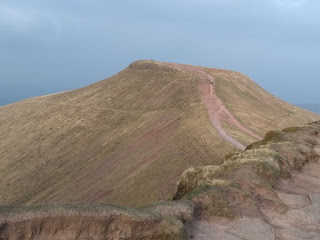
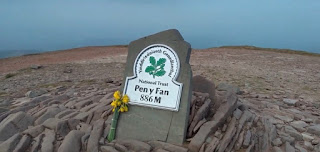
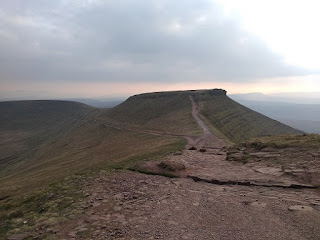
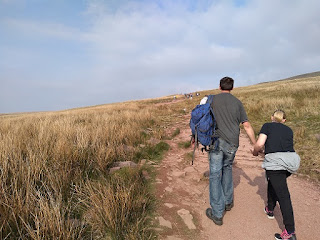
Pen Y Fan is the highest peak in South Wales and also Southern Britain situated in the Brecon Beacons National Park at a height of 886 metres. It happens to be the most widely hiked mountain in the region because of its easy access. There are well made footpaths all the way to the summit making it easy for all levels of hikers to get there.

Pen Y Fan routes to reach the summit are many but 2 routes are most popular. The route from the Storey Arms car park and the other from Pont ar Daf car park! Although both can be hard, the one from Storey Arms is the difficult one while the other one is slightly easier. If you are fit enough, you can use both.


Park your car if you can find space at the car park. It can be difficult to park there but you can park on the side of the road as long you don’t park on the tarmac (otherwise you might get a ticket). Cross over the bridge (also the source of the River Taf) and walk uphill.

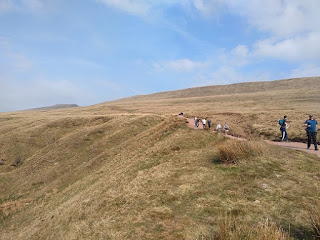
Continue going uphill. Take your time, don’t rush and stop and take a rest if you have to. Drink water. The Pen Y Fan walk can be tough but it’s worth it.


Enjoy the views. Take pictures. Don’t feel compelled to get to the summit in a hurry.

I will let the photos do the talking.


It’s cold at the top therefore take a waterproof jacket with you and warm clothing. I wonder why the girl in the above picture is sitting on the edge of the sudden drop? Be careful and don’t be stupid to do silly things like that.

Don’t forget to check the weather. The closest town is Merthyr Tydfil. If you type “Pen Y Fan weather” in Google, it will give you the weather. Weather can change suddenly and can be cold. So check the weather forecast for Pen Y Fan before you start your trek.

You will find many people saying that the Pen Y Fan walk time is around 1 hour going up and 1 hour going down however it could take longer if you stop for rest.


Pen Y Fan walk summary

Height – 886 m or 2906 feet.
Walking distance – 3 km from the car park.
Pen Y Fan weather forecastForecast from the Met Office.
Storey Arms postcode – Libanus, Brecon LD3 8NL (A470).
Walk time – Approx 2 hours going up and down again but it will depend on your level of fitness.

Discovering Kalsi: A Tiny Hamlet in the Himalayas

There are many places in India which have never managed to come to the media limelight but are historically significant nevertheless. One such place, as I discovered last spring, is the cozy little mountain settlement of Kalsi. This village sits in the foothills of the Shivalik Mountains in the lap of the Himalayan plains, just an hour from Dehradun town. It was a completely unplanned trip which just fell into my itinerary out of nowhere. Some cousins and I were exploring the entire Dehradun-Mussoorie-Dhanolti belt when our minivan had a major breakdown. It was taking hours to get it fixed so we decided to do a little detour. We asked around where we could go in the vicinity and were recommended Kalsi. After managing to hire a cheap and comfortable Dehradun car we headed towards this almost obscure village.

A dreamland called Kalsi

Perched atop 780 meters from the sea level, this destination is a meeting point of the Yamuna and the Tons Rivers. But what defines Kalsi is its ancient monuments and sites of historic significance.

Spring had brought about a more saturated shade of green, complemented by the sparkling blue sky and the yellow mustard flowers dotting the fields. The sleepy hamlet appeared to move slower than time, resting against the misty mountains and verdant fields. We walked through the fields and woods, crossed the stream on foot, and landed at the bamboo bridge, literally dangling on the gurgling mountain river. It was quite a challenge to cross the wobbly bridge. But the view on both sides was spectacular. The crystal clear spring sky was like the perfect contrast to the bright green foliage bathed in sunlight. And it was complemented with a serenity that one yearns for. We finally managed to cross over after pausing multiple times to take photos of the landscape from every possible angle. Exhausted from all the hiking, we later took a little break on the other side. Sitting on the banks looking over the sparkling waters of the river as the crisp alpine breeze brushed our faces, felt no less than a dream; an experience one can only cherish and cannot explain in the most articulated words.

A trip down history

The only existing site of the historical significance of Kalsi, as we learned, was the Ashoka Rock Edict. And perhaps the most popular tourist attraction of the village. The Edict is a huge rock of 10 feet long and 8 feet wide with inscriptions by none other than the Mauryan emperor Ashoka, somewhere between 273 and 232 BC. There are 14 inscriptions which are a compilation of reforms and advice written in Prakrit and Brahmi script which laid down the core philosophies and principles of Buddhism. It is said (and believed) that Ashoka’s empire extended till this village and he created this edict when he adopted Buddhism.

The Ashoka Rock Edict sits in corner of a lush meadow, surrounded by beautifully manicured gardens. The red brick dome-like structure was a colorful contrast to the greens and blues. We had to walk down a hilly slope to reach the premise. I had never seen a historic site so peaceful, without a single human soul in sight. Surrounded by the fragrance of fresh grass and alpine flowers and the symphony of the wind with the rustling water of the Yamuna, this place took me back in time and put me in a place which was beyond this world.

Overall, it was an experience that seldom happened with me and I truly relished every moment of the magical little land called Kalsi. After all, the best things come by when we don’t plan them, isn’t it?

Pro Tips

Book an affordable Dehradun airport taxi service for a better traveling experience through the hills.

There’s no place to eat or lodge in this village. So, if you are trekking, hiking, or just roaming around, stack up some food and water before you leave for Kalsi.

Holi - Festival of Colors


Holi is the festival of colours, one of the most awaited festivals in the country and celebrated by Hindus all over the country. The festival is celebrated with much joy and vigour all across the country especially in North India. Holi is not just a festival; it’s a tradition which dates back millenniums. It’s one of those festivals that brings out the child in everyone.

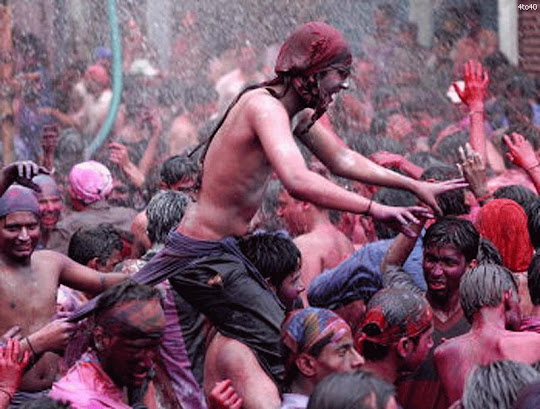
The colourful festival of Holi spans over two days and marks the beginning of spring. On the first day, known as day of “Holika Dahan”, fire is lit marking the victory of truth over evil. The second day is “Phag”, when the actual Holi is celebrated with vibrant colours and water. The festival bridges gap between people of different communities and age groups and people hug each other while smearing each other’s face with paint.

The Legend of Holi

Hiranyakashyap’s who was a mighty demon who beat the gods and became the master of the universe. He had a son named Prahalad. Prahalad was hated by his father as Prahalad was a devotee of Lord Vishnu, one of the most worshipped gods among Hindus.

Prahlad was confronted many times by his father for worshipping Vishnu. The king decided to kill Prahlad. Prahlad was thrown off a cliff, attacked by the king’s soldiers, crushed by elephants and many such antics were used by Hiranyakashyap but all these attempts failed. After many failing attempts, Hiranyakashyap thought of a master plan and called his sister Holika. Holika was blessed by gods in a way that she was immune to fire, that she wouldn’t get burned. Hiranyakashyap asked her to kill his child. Holika initially hesitated to kill Prahlad but agreed when forced. Holika held Prahlad in her lap and sat in the middle of fire.


As Holika was immune to fire, they thought it would be a perfect plan, and their motive would be fulfilled. But something unexpected unfolded. As Holika was using her power for evil, her power was taken away by the gods and she was burnt to ashes. Prahalad as always was unharmed who kept chanting the name of Vishnu. Vishnu protected his greatest devotee and Prahalad escaped unhurt.

Later, Vishnu killed Hiranyakashyap by appearing as Narsingh avatar and Prahlad was crowned as the king. Narsingh was half human and half Lion. Lord Vishnu had to appear in a Narsingh avatar as Hiranyakashyap was blessed by powers that he could not be killed by any human or animal or be killed in the sky or on land.

Celebrating Holi

Holi is celebrated in March, every year. Though Holi is a Hindu festival, not much religious practices are attached with the festival. To celebrate the victory of good over evil, bonfires are lit on the first day of festival and a dummy of Holika is burnt.

The festival is welcomed by everyone in great spirits with a lot of singing and dancing involved. Holi is celebrated with much joy in North India and the Holi of Mathura is extremely famous. It starts a week before the actual festival and attracts enthusiastic people from far off places.

The morning of Holi is awaited by much anticipation especially by kids. They throw coloured water with water guns on their friends and family and some almost anyone. You will find youths (their face and hair drenched in colour and in almost unidentifiable state) on their bikes and open jeeps zooming around the cities. In the noon when everyone is done with colours, comes the time of food that has been specially prepared. People on this day usually have sweets and many even drink bhang (marijuana).

The festival of Holi is usually held around March. And the best place to visit during Holi is in Mathura, the birthplace of Lord Krishna and Vrindavan where he spent this childhood, all of which can easily reached from Delhi. Holi is not particularly celebrated in South India.

Those travelling to India will find Holi very interesting. It’s one of its kind! Due to large numbers of Indians living in the USA and Europe, Holi and Diwali have also become popular in the West. The date of the festival changes year after so you need to check if you wish to travel to India during Holi. This year’s Holi (2013) is on the Wednesday, March 27.

Video of people playing the festival of colour, in Delhi, India

Open your heart and enjoy. You will love Holi…

This year in 2019 Holi will be celebrated on March 20 and March 21.

Pictures of Barcelona Spain

Barcelona (Spain) is the capital of Catalonia and is renowned for its rich cultural heritage, architectural works and is a major economic centre of South West Europe. Barcelona happens to be a huge tourist destination for people around the world. Some of the places to visit in Barcelona include Sagrada Familia, Barcelona Cathedral, Montserrat, Park Güell, Palau Güell, Arc de Triomf, Gothic Quarter and Parc de la Ciutadella.

A friend of mine was in Barcelona recently and took some photos of the various places he visited. He visited some of the famous landmarks, areas and attractions Barcelona has to offer. Here are a few pictures of Barcelona taken by my friend. See for yourself how beautiful Barcelona is!

barcelona in april weather

what to do in barcelona for 3 days

things to do in barcelona spain

Barcelona places to visit at night

things to see in barcelona spain

pictures of barcelona nights

barcelona places to visit in 2 days

things to do in barcelona spain with family

things to do in barcelona in april

pictures of barcelona at night

My Books

HTML tutorial

Trending now